When Your Brakes Tap Out: Understanding and Beating Brake Fade on Heavy Urban Routes
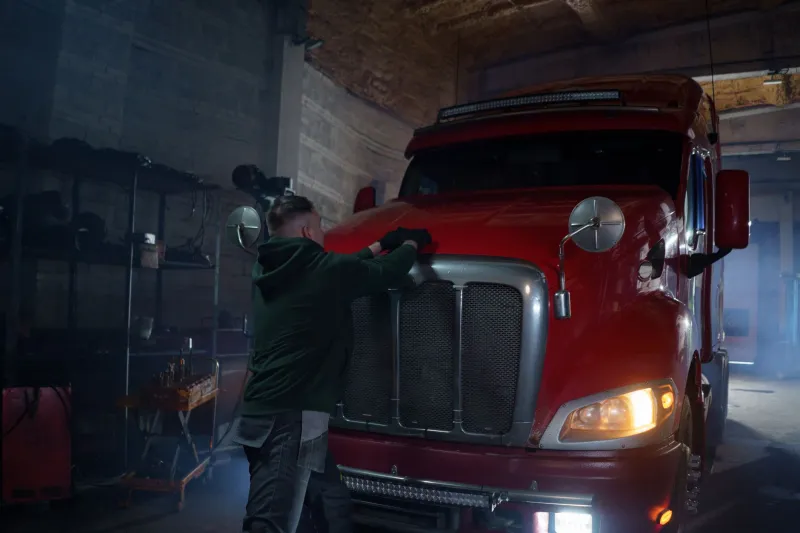
Picture this: you're hauling a full load down a busy urban stretch — think the kind of stop-and-go grind you'd find on I-90 through Chicago or the 405 through LA. You've been riding the brakes for the last twenty minutes, inching forward, squeezing down, letting off, repeating. Then a delivery van cuts you off two car lengths ahead. You press the pedal — firm, confident — and the truck slows, but not nearly fast enough. That mushy, delayed response you just felt? That's brake fade, and it's one of the most underestimated hazards in commercial trucking.
This isn't a fringe problem. It's physics, and it doesn't care how experienced you are behind the wheel.
What's Actually Going On Under There
Brake fade happens when your braking system generates more heat than it can effectively dissipate. Every time you apply the brakes, friction converts kinetic energy into thermal energy. That's the whole point — but there's a ceiling on how much heat your rotors, drums, pads, and shoes can absorb before they start losing effectiveness.
There are two main types of fade worth knowing about:
Pad or lining fade occurs when the friction material itself gets too hot. At extreme temperatures, the compounds in your brake pads or drum linings begin to break down, releasing gases that create a thin film between the friction surface and the rotor or drum. It's like trying to grip something through a layer of oil. The contact is still there, but the bite is gone.
Fluid fade — sometimes called vapor lock — happens inside the hydraulic system. Brake fluid has a boiling point, and when heat migrates from the calipers into the fluid lines, moisture-contaminated fluid can boil and create vapor bubbles. Vapor compresses; fluid doesn't. So instead of force transmitting cleanly to the calipers, you're compressing air. That spongy pedal that goes almost to the floor? That's vapor lock doing its thing.
For air brake systems — standard on most heavy commercial trucks — the dynamics are a bit different, but thermal overload still hammers drum efficiency and can cause brake adjustment issues and lining glazing that mimic fade in real-world performance.
Warning Signs You Shouldn't Ignore
Brake fade doesn't usually ambush you without warning. Your truck gives you signals — you just have to know what to listen (and feel) for.
- Pedal travel increases — You're pushing deeper into the stroke to get the same response you used to get with a light touch.
- Burning smell from the wheel wells — That sharp, acrid odor is friction material cooking. It's not subtle.
- Pulling to one side — If one brake is fading faster than the other, the truck will drift during stops.
- Reduced deceleration — Your truck is technically braking, but stopping distances are noticeably longer than normal.
- Vibration or pulsing through the pedal — Can indicate warped rotors from repeated thermal stress cycles.
Any one of these on a loaded truck in heavy traffic is a serious safety flag. All of them together mean you need to pull over and let that system cool down before continuing.
Driving Habits That Make or Break Your Brakes
Here's where experienced drivers separate themselves from the pack. The single most effective thing you can do to manage brake fade isn't a parts upgrade — it's changing how you use your brakes in the first place.
Increase your following distance. Sounds obvious, but it's wildly underused in practice. When you're trailing another vehicle by eight to ten seconds instead of three, you can feather the throttle and coast to slow down rather than hammering the brakes repeatedly. Less friction input means less heat buildup, full stop.
Use engine braking aggressively. Whether you're running a manual with a Jake brake or an automatic with an exhaust brake, these systems are your first line of defense against thermal overload. They slow the truck using engine compression, not friction, which means your brake system gets a break — literally. On any route with long grades or sustained urban deceleration, engine braking should be your default, not an afterthought.
Brake firmly and less often rather than lightly and constantly. Dragging the brakes — maintaining light, sustained pressure over a long distance — is actually harder on your system than a series of firm, deliberate stops. A firm brake application slows you down efficiently, then releases, giving the components a window to breathe. Constant light pressure keeps temperatures climbing with no recovery time.
Give your brakes recovery time when possible. If you're on a route with predictable break points — a red light sequence you know, a delivery stop coming up — use that time to let heat dissipate. Even a couple of minutes of airflow over the rotors and drums makes a measurable difference.
Cooling and Inspection Strategies
If you suspect your brakes have taken a heat beating, don't just park it and walk away. Here's how to handle the aftermath properly.
After a heavy braking session, avoid coming to a complete stop immediately if you can safely keep rolling at a slow crawl for a minute or two. Moving air across the rotors and drums accelerates cooling significantly. Parking a hot truck means the heat just soaks into adjacent components with nowhere to go.
Once cooled, do a walkaround. Look for scoring or bluing on the rotor faces — that blue discoloration is a sign of extreme heat exposure and potential metallurgical change in the rotor. Check for uneven pad wear. On air brake systems, listen for any hissing that might indicate a compromised component.
Get your brake fluid tested if you're running hydraulic systems. Fluid moisture content rises over time and dramatically lowers the boiling point. A cheap test strip or a shop moisture test can tell you if it's time for a flush — and on commercial vehicles doing urban duty, that interval should be aggressive.
Upgrade Options Worth Considering
For drivers who regularly run demanding urban routes with heavy payloads, there's a real case for upgrading your braking hardware.
High-performance brake pads and linings formulated for high-heat applications can significantly raise the fade threshold. Look for compounds rated for severe-duty or commercial-duty use — they cost more upfront but hold their effectiveness at temperatures that would have standard pads crying uncle.
Slotted or drilled rotors improve heat dissipation and help evacuate the gas buildup that contributes to pad fade. They're more common on lighter commercial and pickup applications but worth exploring depending on your setup.
Larger diameter rotors or drum upgrades, if your vehicle platform supports them, increase thermal mass — meaning the system can absorb more heat before reaching the fade threshold.
Stainless brake lines (on hydraulic systems) reduce line expansion under pressure, giving you a firmer, more consistent pedal feel even when temperatures climb.
None of these upgrades replace smart driving habits, but they raise the floor on what your system can handle when conditions get ugly.
The Bottom Line
Brake fade isn't a sign that you bought cheap parts or that your truck is a lemon. It's a fundamental physical limitation of friction-based braking systems under sustained thermal load. What separates drivers who experience it regularly from those who don't is a combination of technique, maintenance discipline, and knowing when the equipment needs a little help keeping up with the demands of the job.
If your routes are putting serious heat into your braking system day after day, that's information worth acting on — not something to get used to. Your stopping power is the last line of defense between a close call and a catastrophe. Keep it sharp.