Sitting Pretty or Sitting Dangerously? How Your Cab Setup Affects Your Wallet and Your Health
Here's a question most truckers don't ask themselves until something goes wrong: when did you last actually think about how you're sitting in your rig?
Not whether the seat's adjusted. Not whether the lumbar knob is cranked up. But really think about it — whether your cab is set up in a way that's keeping you sharp, safe, and healthy mile after mile. For owner-operators logging 500-plus miles a day, and for fleet managers trying to keep drivers on the road and out of clinics, this isn't a soft question. It has hard numbers attached to it.
Let's get into it.
Fatigue Is a Design Problem, Not Just a Willpower Problem
Driver fatigue is one of the leading contributors to large truck crashes in the United States, according to data from the Federal Motor Carrier Safety Administration. And while most conversations about fatigue focus on hours of service regulations and sleep schedules, there's a piece of the puzzle that gets less attention: the physical toll your cab environment takes on your body before you ever feel tired.
Poor seating posture forces your muscles to work constantly just to hold you upright. Steering wheel placement that makes you reach or hunch compresses your spine and tightens your shoulders. Controls that require you to twist or stretch repeatedly — even slightly — add up to thousands of micro-stresses over the course of a shift. By hour six, that accumulated strain isn't just uncomfortable. It's slowing your reaction time and narrowing your attention.
Research from the National Institute for Occupational Safety and Health has consistently linked poor ergonomic conditions in vehicle cabs to increased musculoskeletal disorders, higher rates of lower back injury, and measurable cognitive fatigue. You don't have to feel wrecked to be impaired. The degradation is gradual, and that's what makes it dangerous.
The Seat Is Your Most Important Piece of Safety Equipment
Most drivers treat their seat like an afterthought. It came with the truck. It works. Why mess with it?
Because the OEM seat that came stock in your cab was designed for a statistically average driver — and there's a good chance you're not that person. Height, weight, torso length, leg length — all of these affect how you interact with the steering wheel, the pedals, the mirrors, and every control in between. A seat that doesn't fit you correctly isn't just uncomfortable; it's actively working against you.
Air-suspension seats are one of the most impactful upgrades a commercial driver can make. They absorb road vibration before it reaches your spine, which is significant given that whole-body vibration is a recognized occupational hazard for professional drivers. Quality air seats from brands like National Seating, Bostrom, and Sears Seating allow for precise adjustments in lumbar support, seat tilt, armrest position, and suspension travel — all of which let you dial in a posture that your body can actually sustain for hours at a stretch.
For fleet managers, the math here is pretty clear. The average workers' compensation claim for a back injury runs well into the tens of thousands of dollars when you factor in medical costs, lost productivity, and potential litigation. A premium air seat costs a fraction of that. One prevented injury claim can pay for upgrades across multiple trucks.
Control Placement: The Inches That Matter
There's a concept in ergonomics called the "neutral reach zone" — basically, the range of motion where your body can operate controls without straining. In a well-configured cab, your most frequently used controls should live in that zone. In a lot of real-world working trucks, they don't.
Steering wheel tilt and telescoping adjustments exist for a reason. If your wheel is locked in one position and you've never moved it, you're probably not driving in your optimal position. Same goes for mirror adjustment — straining your neck repeatedly to check blind spots adds up, and it's a fixable problem. Aftermarket convex mirrors, wide-angle mirror kits, and camera systems can dramatically reduce the physical demand of keeping tabs on what's around your rig.
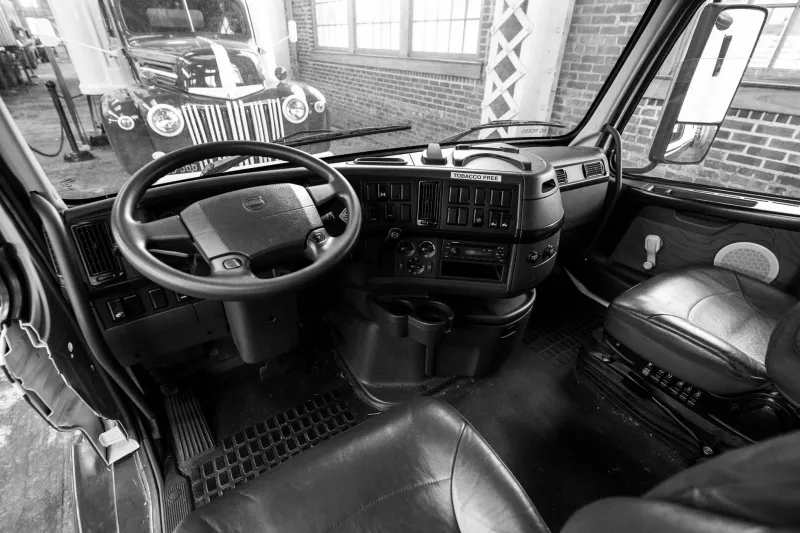
CB radio placement, phone mounts, GPS units, and ELD tablets all fall into this category too. Anything you're reaching for regularly should be positioned so you're not compromising your driving posture to access it. A well-organized dash isn't just tidier — it's safer.
Climate Control Is Part of the Equation Too
This one gets overlooked, but it matters. Cab temperature has a measurable effect on alertness and cognitive performance. Studies on occupational driving consistently show that both excessive heat and cold increase fatigue onset and impair decision-making. Drivers in poorly climate-controlled cabs — especially during long summer hauls or cold Midwest winters — are fighting their environment in addition to everything else.
If your HVAC system isn't keeping up, or if you're relying on idling to stay comfortable during rest periods, it's worth looking at auxiliary climate solutions. Diesel-powered parking heaters, battery-powered HVAC units, and reflective cab insulation products have all come a long way in recent years. They're also increasingly relevant from a regulatory standpoint, as more states and municipalities crack down on extended idling.
Noise and Vibration: The Silent Drain
A loud cab is an exhausting cab. Prolonged exposure to high ambient noise levels — engine roar, road noise, wind — forces your brain to work harder to process information and communicate. Over a long haul, that's real cognitive load that contributes to fatigue.
Sound-deadening materials applied to the cab floor, firewall, and door panels can make a noticeable difference. Foam-backed floor mats, door seal replacements on older trucks, and acoustic headliners are all relatively low-cost upgrades that reduce the overall noise burden on your nervous system. It's not about making your truck feel like a luxury sedan — it's about removing unnecessary stress from your operating environment.
Making the Case to Your Fleet Manager (Or to Yourself)
If you're an owner-operator, this is an investment in your most valuable asset: your ability to keep driving safely and productively for years to come. Chronic back problems, repetitive strain injuries, and fatigue-related incidents don't just hurt — they threaten your livelihood. Spending a few hundred to a few thousand dollars on cab ergonomics is basic business maintenance.
If you're a fleet manager, frame it in terms your accountants will understand. Reduced injury claims. Lower turnover — because drivers who feel physically beaten up at the end of every shift don't stick around. Better safety records that translate to lower insurance premiums. And drivers who are sharper behind the wheel, which is the whole point.
The cab isn't just where your driver sits. It's where your operation lives or dies, one mile at a time. Set it up right.