Your Cab Is Making You Tired — And Tired Drivers Lose Money
Let's be blunt about something the trucking industry doesn't talk about enough: the way your cab is set up is either working for you or working against you, and most drivers are running setups that actively cost them money every single day.
Not in an obvious, line-item-on-a-spreadsheet kind of way. In the slow, compounding, easy-to-ignore way that shows up as chronic back pain, reduced alertness, slower reaction times, and — eventually — accidents, medical bills, and driver turnover that costs small fleets tens of thousands of dollars a year.
If you're an owner-operator or you manage a small fleet, this is worth your full attention.
The Fatigue-Finance Connection Nobody's Tracking
Fatigue is the trucking industry's most normalized problem. Drivers joke about it. Dispatchers work around it. But the financial reality of driver fatigue is anything but funny.
Studies consistently show that fatigued driving degrades reaction time and decision-making in ways that rival impairment. FMCSA data links fatigue to a significant percentage of large truck crashes — and crashes are expensive in ways that go well beyond the obvious. There's the equipment damage, the cargo loss, the insurance premium spike, the potential litigation, and the regulatory scrutiny that follows.
Now here's the part that often gets missed: a substantial portion of driver fatigue isn't about hours of service. It's about physical strain accumulated over the course of a shift. And that strain is directly tied to cab ergonomics.
A driver fighting a poorly adjusted seat for eight hours arrives at their destination more depleted than one who was genuinely comfortable. Multiply that across a week, a month, a season — and you're looking at measurably worse performance, higher health costs, and shorter careers.
The Five Adjustment Points Most Drivers Never Touch
Modern trucks — even work trucks that aren't luxury flagships — have significantly more adjustability than most drivers ever use. Here are the five areas where bad setup causes the most damage:
1. Seat Height and Tilt
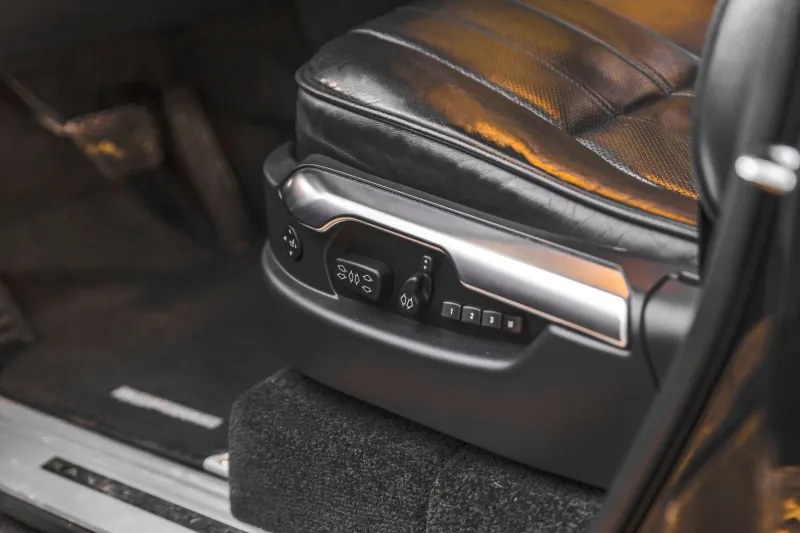
Your seat height should position your hips at or slightly above knee level, with both feet flat on the floor or the pedals without stretching. Seat tilt — the angle of the seat pan — affects hip flexor strain more than almost any other adjustment. Most drivers set it flat and leave it. Even a slight forward tilt (2–3 degrees) can dramatically reduce lower back loading on long hauls.
2. Lumbar Support
Factory lumbar support is often set at a compromise position that works adequately for nobody. Take five minutes to actually dial in the lumbar support to fit the natural curve of your lower back. If your truck's factory lumbar is inadequate, an aftermarket lumbar cushion in the $40–$120 range is one of the best investments a long-haul driver can make.
3. Steering Wheel Position
Tilting and telescoping your steering wheel isn't just about reach — it's about shoulder and wrist position over thousands of miles. Your arms should have a slight bend at the elbow when your hands are at the nine-and-three position. A fully extended reach means your shoulders are working constantly to support your arms. That's fatigue you're creating before you even hit the highway.
4. Mirror Position and Head Movement
This one connects ergonomics to safety in a direct line. If checking your mirrors requires you to rotate your neck more than about 45 degrees, you're building in cumulative strain and creating moments where your eyes leave the road longer than they should. Spend the time to get your mirrors truly dialed — it's not a one-time setup, it's something to revisit as your driving position changes.
5. Pedal and Armrest Positioning
Armrests that are too high cause shoulder elevation. Too low, and you lose the support entirely. Your armrests should let your shoulders drop naturally. On the pedal side, make sure your heel can rest on the floor while your foot operates the accelerator — hovering your foot all day creates calf and ankle fatigue that's easy to underestimate.
The Diagnostic Checklist
Run through this at the start of your next shift:
- Can you reach the pedals with a slight knee bend, not a full extension?
- Are your hips at or above knee height?
- Is your lower back touching the seat back without you having to press into it?
- Are your elbows slightly bent when holding the wheel at nine-and-three?
- Can you check all mirrors with less than a 45-degree head turn?
- Do your shoulders feel relaxed — not elevated — when resting on the armrests?
- Is your headrest actually touching the back of your head (not your neck)?
If you answered no to more than two of these, your cab setup is costing you.
Affordable Fixes That Actually Pay Off
You don't need a new truck to fix most of these issues. Here's a practical upgrade path:
Lumbar support cushion: $40–$120. One of the highest-return investments in trucking. Look for memory foam or adjustable air options.
Seat cushion with coccyx cutout: $50–$150. Reduces pressure on the tailbone and improves blood circulation on long sits.
Steering wheel cover with grip padding: $20–$50. Reduces grip tension, which is a surprising contributor to hand and forearm fatigue.
Anti-fatigue floor mat: $30–$80. Particularly useful for drivers who do frequent short-haul work with lots of in-out movement.
Adjustable armrest extensions: $60–$150 for aftermarket bolt-on options that replace inadequate factory armrests.
Total investment for a comprehensive ergonomic overhaul: $200–$500 in most cases. Compare that to even a single chiropractic care episode, one minor accident deductible, or the cost of recruiting and onboarding a replacement driver who left because the job was destroying their body.
For Fleet Managers: The Retention Angle
If you run more than one truck, this conversation has an added dimension. Driver retention is one of the most significant cost factors in small fleet operations. Drivers who are physically comfortable, less fatigued, and feel like their employer invested in their wellbeing stick around longer.
Standardizing an ergonomic setup process across your fleet — even just a 20-minute cab orientation for every driver on every truck — signals that you take their physical health seriously. That matters to experienced drivers who have options.
Drive Proud Means Drive Smart
The cab is your office. You wouldn't spend eight hours a day in an office chair that was actively hurting you if you had any other choice. You do have a choice here — and it doesn't have to cost a fortune. Fix the setup, reduce the fatigue, and watch the numbers improve across the board.