Beneath the Surface: The Undercarriage Protection Game That Could Save Your Truck Thousands
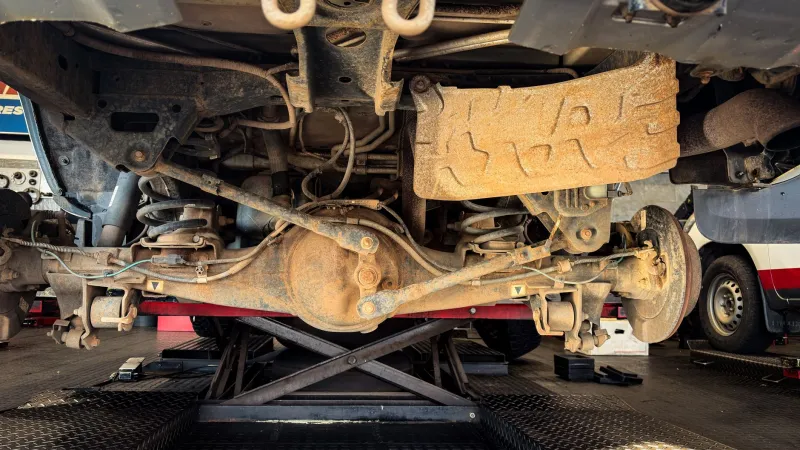
You detail the cab. You wash the body. You check the tires. But when's the last time you got serious about what's happening underneath your truck — the part that spends its whole life getting pelted with mud, road salt, gravel, and standing water?
If your answer is "not recently," you're not alone. Undercarriage maintenance is one of the most consistently skipped items in owner-operator routines. And every mud season, that neglect shows up as rust, seized components, and repair bills that make your eyes water.
Let's fix that.
Why Mud Season Is a Different Animal
Spring mud and winter road salt are brutal on their own. Together? They're a full-on assault on your undercarriage. Salt is hygroscopic — it literally pulls moisture out of the air and holds it against bare metal. Mud compounds the problem by trapping that salt-laden water against frame rails, crossmembers, brake lines, and fuel tanks for days at a time.
Commercial trucks face this harder than most. You're not just driving through a muddy parking lot on the weekends. You're logging serious miles, potentially hauling through agricultural zones, construction sites, or rural routes where road treatment is inconsistent and mud is a permanent feature of the landscape.
The real kicker? Undercarriage corrosion is largely invisible until it's expensive. By the time you notice a rusty brake line or a compromised frame section, the repair bill isn't a maintenance cost — it's an emergency.
What Neglect Actually Costs You
Let's put some numbers on this, because the case for undercarriage protection gets a lot easier to make when you see what ignoring it costs.
- Brake line replacement: $200–$600 per axle, more if corrosion has spread to fittings and brackets
- Fuel tank replacement: $800–$2,500 depending on tank size and mounting hardware condition
- Frame rust remediation: $1,500–$5,000+ depending on severity and whether structural integrity is compromised
- Seized suspension components: $300–$1,200 per occurrence, not counting alignment afterward
And that's before you factor in downtime. A truck sitting in a shop bay is a truck not generating revenue. For an owner-operator running solo, even two or three unplanned down days a year adds up fast.
Compare that to a solid undercarriage protection plan that might run $300–$600 annually, and the math becomes obvious.
Protection Methods: What Actually Works
Spray-On Undercoating
Rubberized undercoating sprays — products like rubberized chassis coating or oil-based undercoating — form a physical barrier between bare metal and the elements. They're effective, but application quality matters enormously. A sloppy application that traps existing moisture will actually accelerate rust rather than prevent it.
Best practice: have undercoating applied by a professional shop on a clean, dry undercarriage. If you're doing it yourself, pressure wash thoroughly, let the undercarriage dry completely, and use a product rated for your climate. Reapply every one to two seasons depending on mileage and conditions.
Skid Plates and Rock Shields
For trucks that regularly run off-road, through construction zones, or on rough rural routes, physical shields are a smart complement to coatings. Skid plates protect vulnerable components — oil pans, transfer cases, fuel tanks — from direct impact. They don't prevent rust on their own, but they prevent the kind of damage that creates entry points for corrosion.
Look for steel or high-density polyethylene options rated for your specific make and model. Aftermarket skid plate kits have gotten significantly more accessible in recent years, with bolt-on options for most popular commercial trucks.
Fluid Film and Oil-Based Treatments
Products like Fluid Film (a lanolin-based treatment) offer a softer, penetrating approach to undercarriage protection. They're particularly good at working into tight seams, joints, and areas where rigid coatings can't fully reach. The tradeoff is that they need more frequent reapplication — typically annually or after heavy mud exposure — but they're excellent at displacing existing moisture.
Many owner-operators use a combination approach: rubberized coating on flat surfaces and frame rails, fluid film on joints, hinges, and brake hardware.
Washout Frequency: The Underrated Variable
No coating in the world replaces regular rinsing. After heavy mud exposure or any time your truck has been running on salted roads, a targeted undercarriage rinse removes the accumulation before it can do its worst. Many truck washes offer undercarriage spray as an add-on for a few dollars — use it. If you're washing at home, a pressure washer with an undercarriage wand attachment makes the job manageable.
Frequency guideline: rinse within 48 hours of salt or heavy mud exposure. Don't let it sit.
Your Seasonal Maintenance Checklist
Before mud season (late winter/early spring):
- Full undercarriage inspection — look for existing rust, compromised brake lines, loose shields
- Pressure wash and degrease the entire undercarriage
- Touch up or reapply undercoating where needed
- Check and re-torque skid plate mounting hardware
- Inspect fuel tank straps and mounts for corrosion
- Lubricate suspension joints and U-joints
During mud season:
- Rinse undercarriage after every heavy mud or salt exposure (within 48 hours)
- Quick visual check of brake lines and fuel lines monthly
- Watch for new squeaks or clunks that could indicate suspension or mount issues
After mud season wraps up:
- Full undercarriage wash and detailed inspection
- Document any new rust spots or damage for repair prioritization
- Reapply fluid film to joints and hardware
- Plan any repair work during slower operational periods
The Bottom Line
Your undercarriage isn't glamorous. Nobody's going to compliment you on your frame rail coating at the truck stop. But the drivers who take it seriously are the ones who aren't getting blindsided by five-figure repair bills or fighting to get a truck through its next inspection.
Built tough means maintaining what you've got. Start underneath — everything above it depends on it.