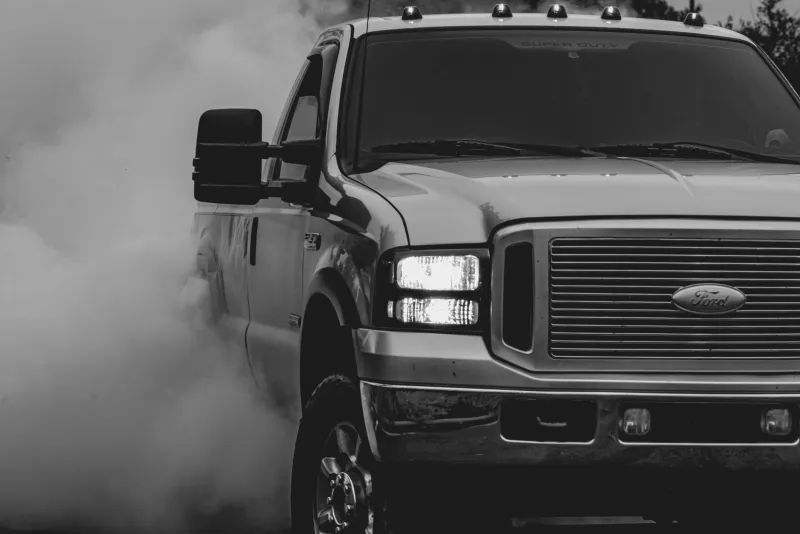
Lift Kits, Lowered Expectations: What Suspension Changes Actually Do to Your Truck
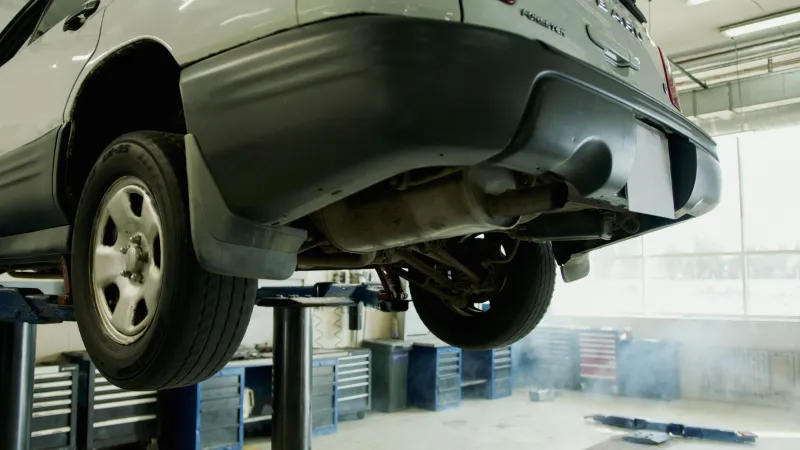
There's a reason truck suspension engineers get paid serious money. The geometry underneath your cab isn't random — it's a carefully calculated system where every angle, every pivot point, and every inch of ride height talks to every other component. When you change one thing, you change everything. And a lot of guys find that out the hard way, about 30,000 miles and a new set of ball joints later.
This isn't an argument against modifying your truck. We're in the business of helping you build the right rig for the right job. But if you're thinking about a lift kit, air suspension upgrade, or even a leveling kit, you owe it to yourself — and your bank account — to understand what's actually happening under there.
What "Suspension Geometry" Actually Means
At its core, suspension geometry describes the angles and relationships between your wheels, axles, control arms, and frame as the suspension moves through its travel. The big terms you'll hear are camber (the tilt of the wheel relative to vertical), caster (the forward or backward lean of the steering axis), and toe (whether your front wheels point slightly inward or outward).
From the factory, your truck's suspension is tuned so those three angles stay within acceptable ranges whether you're lightly loaded, fully loaded, or hitting a pothole at 60 mph. The moment you raise or lower the chassis, you're shifting all three — sometimes dramatically.
A 3-inch body lift, for example, raises the cab and bed but leaves the suspension geometry mostly intact. A 3-inch suspension lift, on the other hand, changes the physical relationship between your control arms and your axle, which can throw your caster angle off enough to create steering pull, accelerated tire wear, and reduced return-to-center steering feel. Some kits compensate for this with extended upper control arms or adjustable cam bolts. Many budget kits do not.
Ride Height and Fuel Economy: The Math Nobody Shows You
Here's a number worth knowing: aerodynamic drag increases with the square of velocity. Raising your truck even two inches increases frontal area and, more importantly, disrupts the airflow under the vehicle. At highway speeds, that translates directly to fuel consumption.
The Department of Energy has documented that every 10% increase in aerodynamic drag can cost between 1-2% in fuel economy on highway routes. For an owner-operator covering 100,000 miles a year in a diesel pickup, even a modest lift-related fuel penalty adds up fast. We're talking hundreds of dollars annually — not theoretical, actual pump money.
Beyond aero, lifted trucks also affect drivetrain angles. When you lift a 4x4, you're changing the operating angle of your front CV axles and driveshaft U-joints. Those components are designed to operate efficiently within a specific range. Push them outside that range and you get vibration, premature wear, and in severe cases, catastrophic joint failure on the highway. Extended-travel CV axles exist for a reason — they're not just an upsell.
Payload, Ride Height, and the Frame
Every truck has a Gross Vehicle Weight Rating (GVWR) that accounts for the stock suspension's ability to manage load distribution across the frame. When you lift a truck and then load it, the geometry shifts again under weight. What was a manageable caster change at empty might become a significant handling issue when you're hauling 1,500 lbs of equipment in the bed.
Air suspension systems — particularly aftermarket helper bags on the rear axle — are popular with work truck owners for good reason. They let you dial in ride height under load, keeping the truck level and maintaining more consistent geometry when you're loaded versus empty. But "more consistent" doesn't mean perfect. You still need to understand your rated payload and stay inside it. Air bags give you a better ride under load; they don't increase your payload rating.
Lift kits that use add-a-leaf springs or block lifts in the rear can actually reduce suspension travel, making the ride stiffer and reducing the suspension's ability to absorb road shock under load. That energy has to go somewhere — and a lot of it goes into your frame, your cab mounts, and your body bolts over time.
The Alignment Conversation You Can't Skip
Every suspension modification — lift kit, leveling kit, even new shocks — requires a professional alignment afterward. This is non-negotiable. The cost of a quality four-wheel alignment is somewhere between $100 and $200 depending on your market. The cost of a set of front tires worn out in 15,000 miles because you skipped it is several times that.
For trucks running lifted suspensions, look for alignment shops that have experience with modified rigs. A shop that only works with stock vehicles may not know how to properly set caster on a lifted 4x4, or how to compensate for the geometry changes introduced by aftermarket control arms.
Stock Geometry Isn't Boring — It's Engineering
Look, there's nothing wrong with wanting your truck to look aggressive. But there's a difference between a thoughtful build that accounts for the engineering — extended UCAs, proper alignment, quality shocks with appropriate valving, and realistic payload management — and a budget lift slapped on without regard for what it's doing to the rest of the system.
The trucks that last 300,000 miles in working environments aren't necessarily the prettiest. They're the ones where every modification was made with the whole system in mind. At Acme Truck Shop, we stock components from brands that understand this — lift kits engineered with geometry correction built in, air suspension kits designed for real load management, and alignment tools that let you dial in what the factory couldn't anticipate.
Before you buy, know what you're changing. The numbers don't lie, and neither does your tire wear.