The Silent Drain: Tracking Down the Electrical Gremlins Killing Your Truck Battery
A dead battery at 5 AM when you've got a load to pick up isn't just annoying — it's money out of your pocket. Jump the truck, get rolling, and the problem disappears for a few days. Then it's back. You replace the battery. Same thing happens three months later. Sound familiar?
The culprit in a lot of these cases isn't the battery itself. It's a parasitic draw — an electrical circuit somewhere in your truck that's pulling current when the ignition is off and the truck should be asleep. Modern trucks are complicated electrical systems, and every aftermarket accessory you add to the mix is another potential leak in the circuit.
Let's talk about how to find it, what's usually causing it, and how to fix it without tearing your entire electrical system apart.
What Is Parasitic Draw, Exactly?
Every modern truck has components that legitimately draw a small amount of power when the vehicle is off — your clock, your keyless entry module, your truck's body control module (BCM) staying alert for key fob signals. This is called quiescent draw, and from the factory, it's typically somewhere between 20 and 50 milliamps. Your battery can handle that level of drain for days without issue.
Parasitic draw is what happens when something that's supposed to be off isn't. A relay that won't fully close. A dome light that stays on because a door switch is failing. An aftermarket amplifier that never enters sleep mode. A GPS tracker that's pinging a server every 30 seconds all night long. These draws can range from 100 milliamps to well over an amp — and at those levels, a fully charged battery can be dead in 12 to 24 hours.
The frustrating part? The truck might start fine for several days in a row, then die after a weekend of sitting. The draw is happening every night; you just don't always catch it.
The Usual Suspects in Working Trucks
Aftermarket accessories are the number one source of parasitic drain in owner-operator and enthusiast trucks. Here's what to look at first:
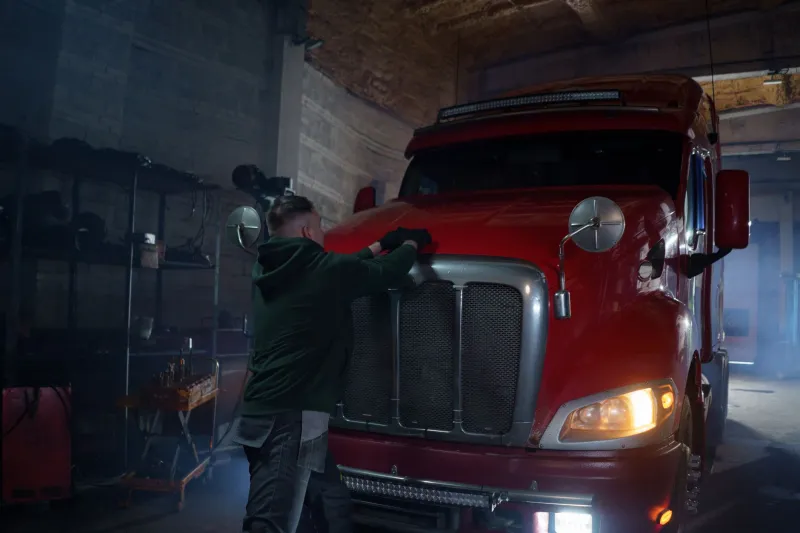
Light bars and auxiliary lighting controllers. Many budget light bar kits use cheap rocker switches that don't fully interrupt the circuit. The relay stays partially energized, drawing milliamps continuously. Over 48 hours, that adds up.
Aftermarket amplifiers and stereo systems. A lot of amps have poor sleep mode implementation. They sense ignition-off but stay in a "standby" state that draws 200-400 milliamps. Some never truly shut down.
GPS trackers and fleet telematics devices. These are designed to stay active. That's the point — they report location and status around the clock. If your device is hardwired to a constant-power circuit rather than a switched circuit, it's drawing power 24/7. For fleet managers, this is expected. For a truck that sits over a weekend, it can kill a battery.
Faulty door, hood, and tailgate switches. This is a factory issue as much as an aftermarket one. A door switch that doesn't fully depress keeps the interior lights or the BCM in an active state. On a truck with a lot of door cycles — delivery work, frequent loading — these switches wear out faster than you'd expect.
Dashcams with parking mode. Parking mode is a great feature. It also draws constant power. Most quality dashcams use a low-voltage cutoff to protect the battery, but cheap units don't, and even quality units can cause issues if the cutoff is set too high.
How to Find the Drain: A Step-by-Step Approach
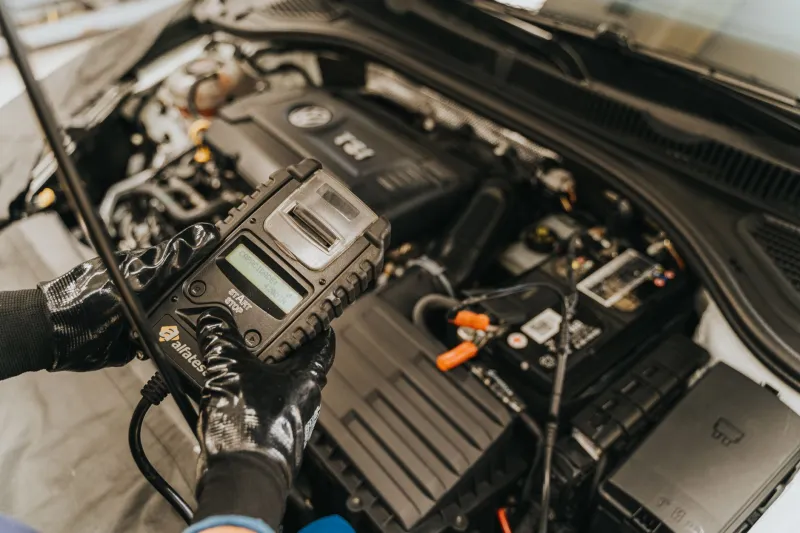
You don't need a dealer-level scan tool to diagnose parasitic draw. You need a digital multimeter capable of reading milliamps (most $30 meters will do this), some patience, and a methodical approach.
Step 1: Let the truck go to sleep. Modern trucks can take 30 to 45 minutes after the ignition is off for all modules to enter sleep mode. Don't rush this step or you'll get false readings.
Step 2: Set your meter to DC milliamps and place it in series with the negative battery terminal. Remove the negative cable, connect one meter lead to the cable end and the other to the battery post. You're now measuring all current flowing out of the battery.
Step 3: Read the baseline. If you're seeing under 50 milliamps, the draw is within normal range. If you're seeing 100 milliamps or more, you've confirmed a parasitic drain.
Step 4: Pull fuses one at a time. Your fuse box diagram (usually in the owner's manual or on the inside of the fuse box cover) identifies which circuit each fuse controls. Pull them one at a time and watch your meter. When the reading drops significantly, you've found the circuit with the problem.
Step 5: Trace the circuit. Now that you know which circuit is draining, you can start checking individual components on that circuit for the specific fault.
Practical Fixes That Don't Require an Electrician
For aftermarket accessories, the simplest fix is often wiring them to a switched 12V source — one that only has power when the ignition is on — rather than a constant power source. Many installers take shortcuts and use constant power for everything because it's easier. Rewiring to a switched source takes an extra 20 minutes and can solve months of battery headaches.
For dashcams and GPS units that need constant power, use a battery isolator relay or a dedicated battery disconnect switch accessible from the cab. Some owners install a small secondary battery for accessories, keeping the main starting battery completely isolated from accessory draw.
For faulty door switches, replacement switches are typically inexpensive — under $20 for most domestic trucks — and are straightforward to replace with basic hand tools.
Don't Just Keep Replacing the Battery
A quality AGM battery can handle deeper discharge cycles better than a standard flooded battery, and it's a smart upgrade for trucks loaded with electronics. But it's a band-aid if the underlying drain isn't addressed. Fix the leak first. Then upgrade the battery if you want extra margin.
Electrical gremlins don't fix themselves. The good news is most of them are findable with a $30 meter and an hour of your time. Don't let a slow drain turn into a missed pickup, a late delivery, or a tow bill that costs more than the fix ever would have.